Why does God let me learn the hard way?

Why Does God Let Me Learn The Hard Way?
A child keeps pulling on a toy after a parent says, "You're going to break it."
The parent gives the warning because they can see what is about to happen.
If the child keeps pulling and the toy breaks, the consequence makes the warning clear.
That brings up a hard question. If God saw where my choice was going, why did He let me learn this the hard way?
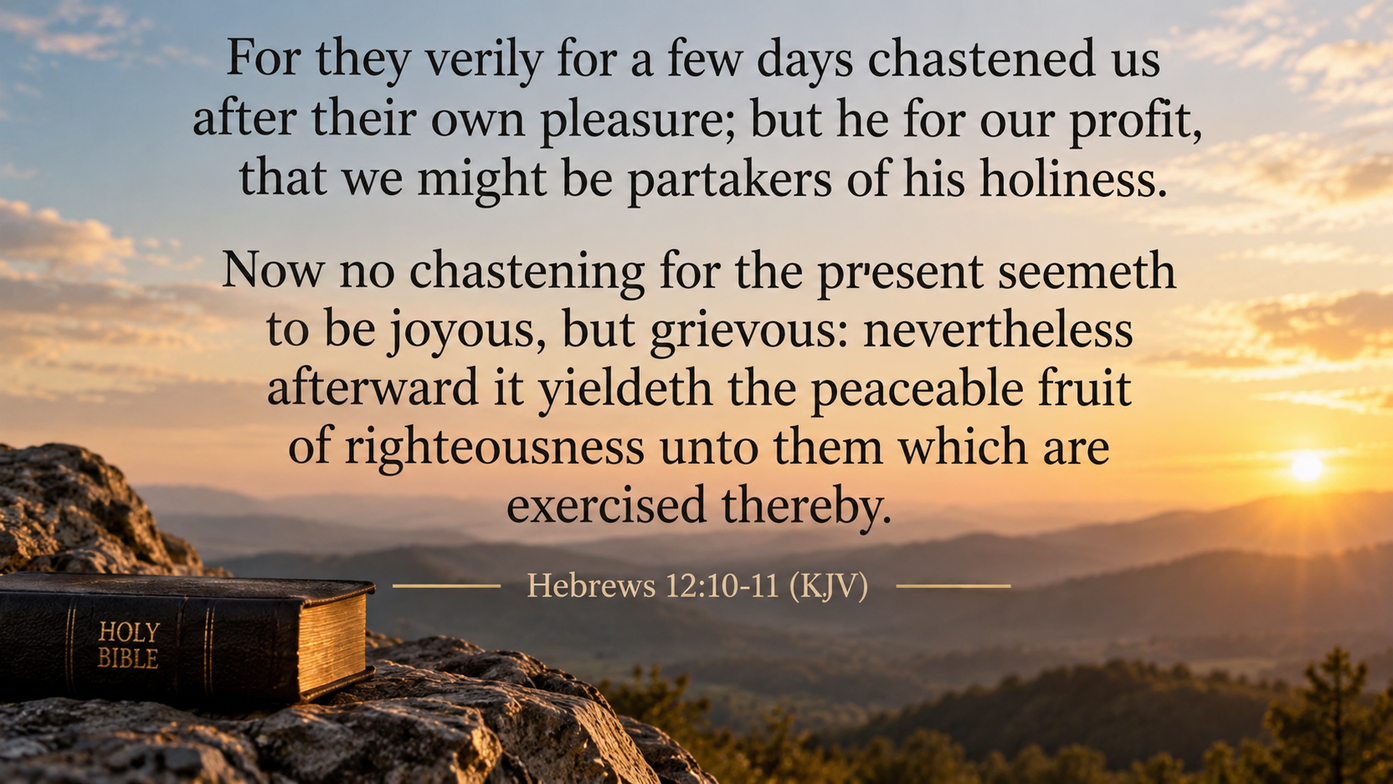
Hebrews 12 calls God's correction chastening. Chastening means discipline meant to correct and train a child.
Verse 10 says God does it "for our profit." Profit here means for our good, so the goal isn't repayment or revenge.
Verse 11 admits what correction feels like while we're inside it. It doesn't seem joyous.
It is painful.
God is saying that he understands the consequences will be difficult to bear.
The verse then says, "nevertheless afterward." Correction can produce peaceable fruit later, even though it feels grievous now.
The verse calls it "the peaceable fruit of righteousness." So we understand that pain doesn't earn righteousness.
Righteousness means being right with God. We don't earn that by suffering or behaving better.
God gives righteousness through faith in Jesus.
The verse says correction can yield peaceable fruit afterward. That fruit shows up as the child learns to live by what God says, instead of what they feel or think.
Exercised means trained. God uses correction to train His child.
This doesn't mean that every painful thing in your life is correction for a mistake you made.
Pain also comes when other people hurt us or our bodies get sick. Tragedy isn't proof that somebody deserved it.
Never look at another person's suffering and announce what God is punishing them for.
There are also times when we knew the warning and kept pulling anyway. The consequence finally made the warning clear.
Condemnation means being judged guilty and left to pay for sin. Hebrews is describing a Father training His child, so a painful consequence can correct us without meaning God has abandoned us.
Face what happened without deciding the mistake is who you are.
Shame can make us cover what happened or blame another person. Grace means we don't have to earn our way back to God.
Jesus carried our sin on the cross, so we can tell the truth about what happened instead of hiding.
God can use any and every season including a grievous one to bring our attention back to Him.
What to do with the lesson you learned the hard way:
Write down the warning you ignored and the consequence that followed, without adding a sentence about what the mistake supposedly makes you as a person.
Compare what shame is telling you with Hebrews 12. Shame may tell you that the consequence proves there is no way back. Scripture says God's correction is for your good and can train you.
Tell your pastor or a mature believer exactly what you ignored and what happened next. Ask for help separating real correction from shame.
Repentance means admitting that trusting yourself was wrong and believing what God says instead. It doesn't pay your way back to God.
If somebody was hurt by your choice, an apology or repair may follow. Neither one buys forgiveness.
PRAYER
Heavenly Father, this lesson has been painful.
Thank You for correcting me as Your child instead of abandoning me to my own way.
Help me tell the truth about the warning I ignored without deciding the mistake is who I am.
Today I believe Your correction is for my good.
Bring me back to believing what You say, and show me how grace responds to what happened.
Thank You that Jesus is my righteousness, so I can receive correction without trying to punish myself.
In the beautiful name of Jesus we pray. Amen.