Why did Jesus call Peter Satan?

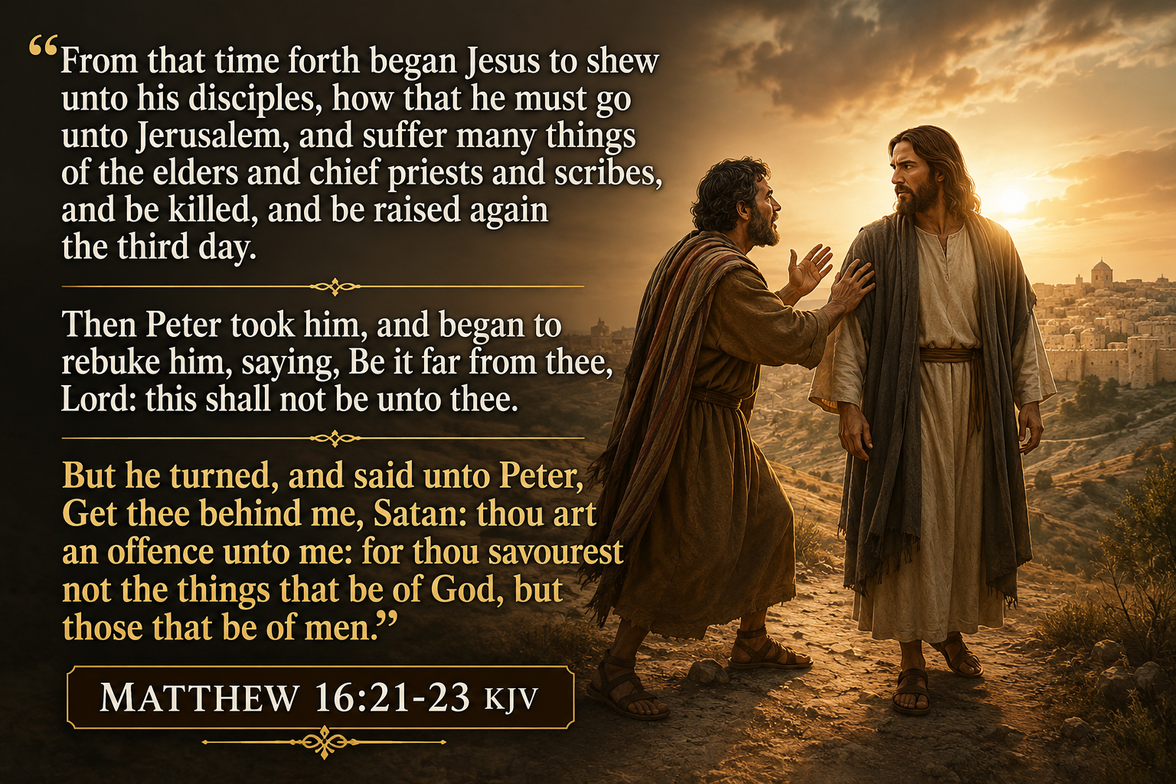
Why Did Jesus Call Peter Satan?
Someone once asked me, "Was Peter possessed when Jesus called him Satan?"
Peter was one of Jesus' twelve disciples.
So no wasn't possessed. Jesus wasn't saying Peter had become the devil.
He was exposing what Peter's advice was doing.
Right before this, Peter had confessed that Jesus was the Christ, the Son of the living God. Jesus told him that truth had been revealed by the Father.
Then Jesus explained what being the Christ would cost. He would go to Jerusalem, suffer, be killed, and rise again the third day.
Peter heard the suffering and missed the resurrection.
He pulled Jesus aside and rebuked Him: "This shall not be unto thee."
Peter thought he was protecting someone he loved. His heart may have felt loyal, but his words were trying to move Jesus away from the very reason He came.
That is why Jesus answered so strongly.
"Satan" means adversary. An adversary stands against something.
Without realizing it because not every "good intention" is God intention, Peter was trying to block the work of God.
In that moment, Peter's advice was standing against Jesus going to the cross and rising from the dead, the very plan God was using to save us.
Look at the next words too: "Get thee behind me."
A disciple follows behind Jesus. Peter had stepped in front and tried to tell Jesus where He should not go.
Jesus put him back in the right place.
Then He explained the problem: "thou savourest not the things that be of God, but those that be of men."
To "savour" something here means to set your mind on it. Peter was looking at the cross through human eyes.
Suffering looked like failure. Death looked like defeat.
Keeping Jesus alive looked like love.
Although it looks good, God doesn't think the way we think. God was showing Peter that he didn't truly know himself.
God could see what Peter could not. Without the cross, there would be no payment for sin.
Without the resurrection, death would still have the final word.
Peter's advice sounded caring, but it opposed the gospel.
That should humble all of us.
Good intentions don't automatically make our advice godly. Sometimes we care about somebody so much that we try to talk them out of an obedient step because it looks painful.
Sometimes we ask God to remove every hard thing when He is trying to lead us through one.
That doesn't mean every painful situation is God's will. It means comfort alone cannot decide what is true.
We have to bring our thoughts back to what God has said.
Jesus did not turn away from the cross. He went to Jerusalem, gave His life for our sins, and rose again the third day, exactly as He told the disciples.
Peter's failure didn't remove him from God's grace either. Jesus corrected him, kept teaching him, and later used that same man to preach Christ boldly.
One wrong thought didn't become Peter's identity.
Jesus confronted it because He loved Peter too much to let human thinking lead him away from God's heart.
Here's how to check your advice today:
Think about one situation where you're asking God or another person to avoid something hard. Ask whether you're responding to what Scripture says or only to what feels safest.
Then read Matthew 16:21-23 again.
If your advice would move someone away from clear obedience, love them enough to stop pushing and pray for God's will instead.
PRAYER
Father God,
Sometimes what feels loving to me is still shaped by fear.
Show me where I've tried to stand in front of Jesus instead of following behind Him.
Teach me to recognize thoughts that sound caring but pull me away from Your Word.
Thank You that Jesus didn't turn away from the cross.
Thank You that He died for my sins and rose again the third day.
Correct me without letting shame name me.
Help me trust Your heart when obedience is painful.
In Jesus' precious name we pray. Amen.