What is Communion actually for?

What Is Communion Actually For?
We can know the communion routine without understanding what it means. The bread gets passed, the cup comes next, and our minds are already on what happens after church.
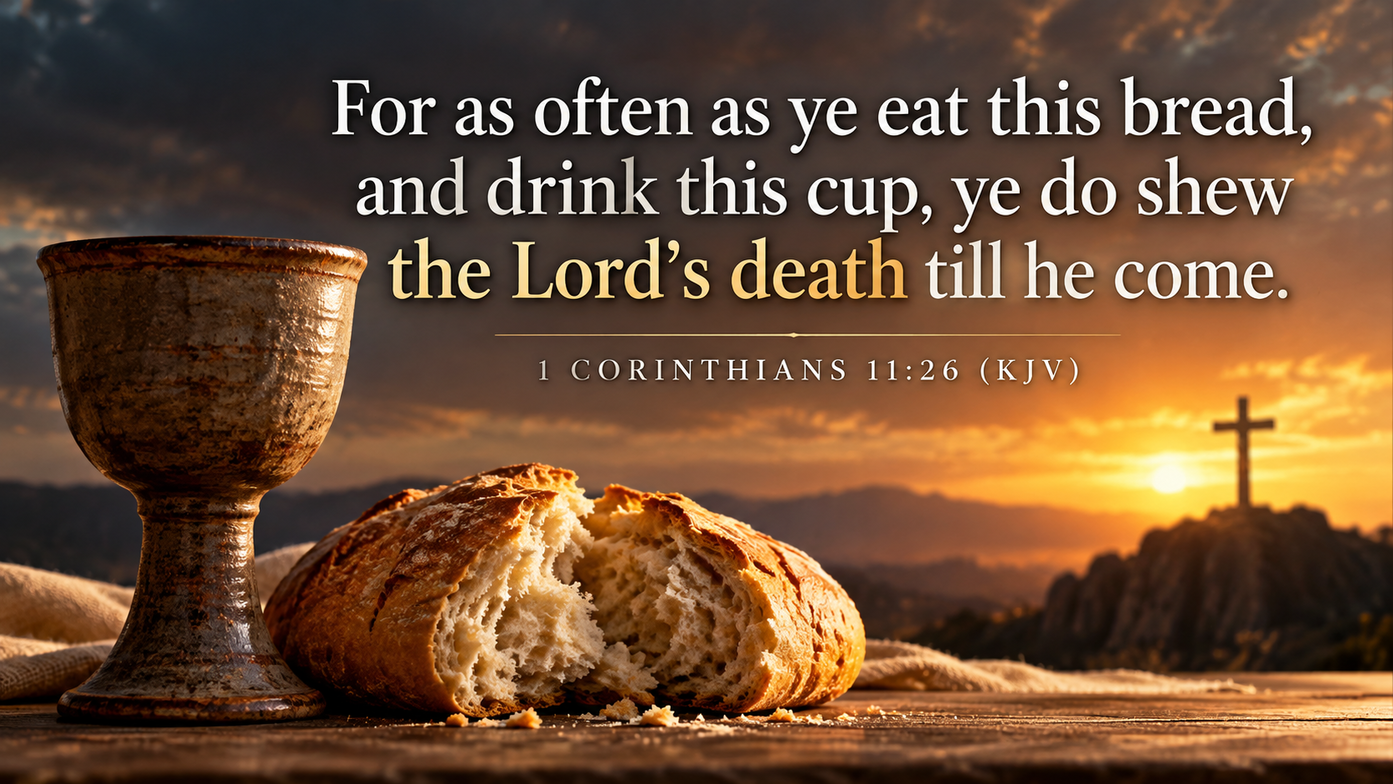
Paul, who wrote this passage, tells us what we're doing in that moment. The word "shew" means "show."
When we share the bread and cup, we proclaim Jesus's death together. We remember that He gave His body and shed His blood for us.
Jesus Himself gave us the reason for remembering:
"And when he had given thanks, he brake it, and said, Take, eat: this is my body, which is broken for you: this do in remembrance of me."
1 Corinthians 11:24 (KJV)
Jesus wanted His followers to remember Him and what He gave for them. The bread and cup bring our attention back to His death for our sins.
Our salvation rests on what He accomplished for us, received by faith. Taking communion doesn't add a payment He left unfinished.
We didn't save ourselves, and we don't keep ourselves saved by performing a ritual correctly.
That's why communion deserves our attention. Paul warns against taking it unworthily.
He's addressing the way people participate, including their failure to recognize the Lord's body and their disregard for one another at the meal. Treating the table carelessly is serious enough that Paul warns of judgment.
That word "unworthily" scares a lot of people because they assume only perfect people are allowed to come to the table. If communion were only for people who never failed, the table would be empty.
Paul's instruction gives us a way to respond:
"But let a man examine himself, and so let him eat of that bread, and drink of that cup."
1 Corinthians 11:28 (KJV)
We examine ourselves honestly. Have we stopped giving any thought to Jesus's sacrifice?
Are we sharing the bread with someone we treat as though they don't matter? Remembering what Jesus gave for us should make us willing to face those questions.
Paul tells us to examine ourselves and then eat, not to prove we've lived a faultless life.
Communion also brings us together. In 1 Corinthians 10, Paul explains that although we're many, we're one body because we all share in one bread.
We come from different lives and carry different struggles, yet every one of us needs the same Savior.
Nobody arrives because they earned a better seat.
Taking communion while looking down on another believer disregards the unity we're expressing. The body Jesus gave was given for them too.
Communion is for remembering Jesus together, proclaiming His death with gratitude until He returns. We look back to the sacrifice He's already made and look forward to seeing Him.
As we share the bread and cup, we remember that the people beside us belong to Him too.
The Next Time You Take Communion
1. Pause long enough to remember.
When the bread and cup come to you, turn your attention to Jesus's death for you. Thank Him for giving Himself for your sins rather than letting the moment pass while you plan the rest of your day.
2. Examine how you're approaching the table.
Consider whether you've been treating communion casually or making it a measure of how good you've been. Take Paul's warning seriously without turning examination into an attempt to earn salvation.
Come with your confidence in Jesus.
3. Give thought to someone you've dismissed.
If a person comes to mind, consider what treating them with care would look like. You may need to apologize for something you said or listen to a concern you brushed aside.
Let remembering Jesus's love affect how you treat that person.
PRAYER
Father God, I've sometimes gone through communion without giving much thought to Jesus or the people beside me.
Today I turn my attention back to what He gave for us.
Help me receive the bread and cup with gratitude rather than distraction.
Give me an honest heart when I examine how I've been treating others, and help me take the next step toward someone I've dismissed.
In Jesus' precious name we pray. Amen.