Is the internet feeding your anger?

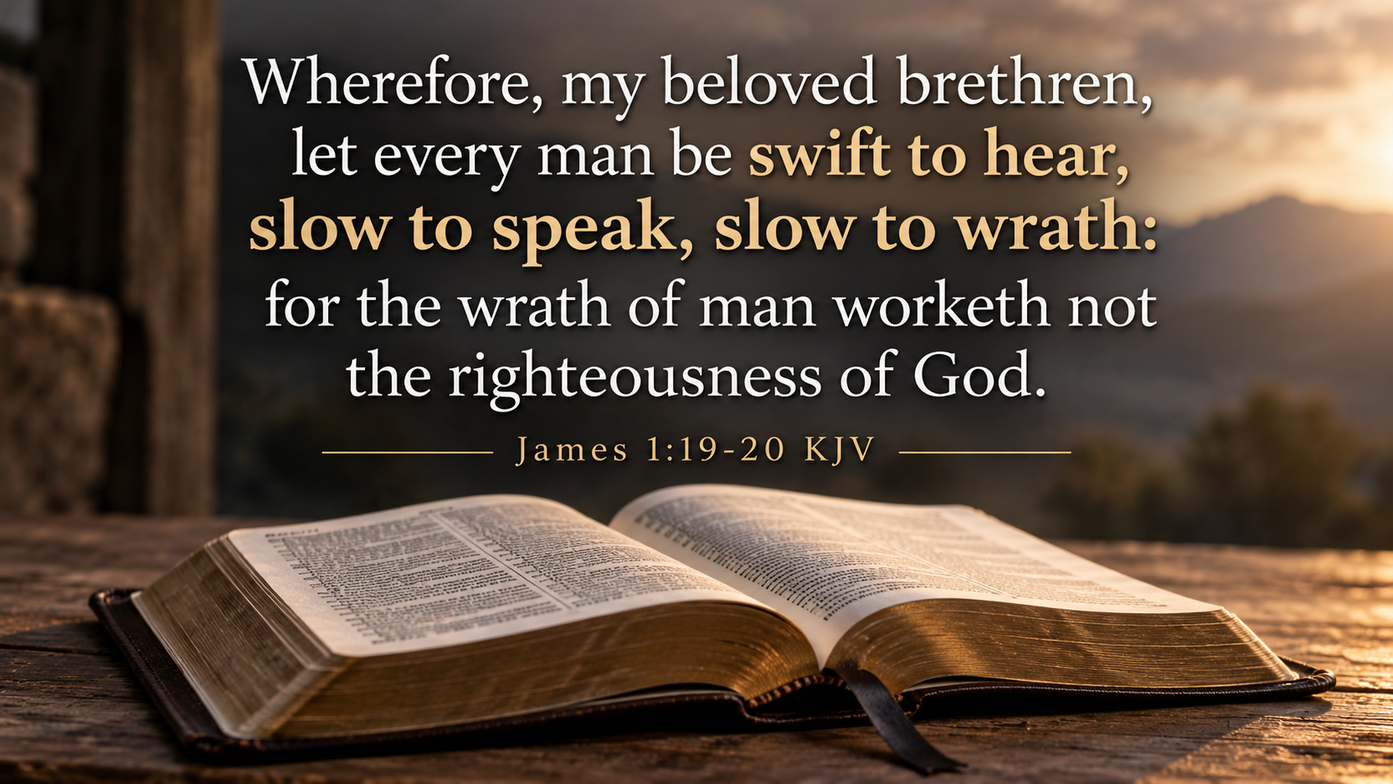
Is The Internet Feeding Your Anger?
The internet can keep us angry all day.
One clip makes us mad, the next one confirms why we should be mad, and within a few minutes our body is sitting still while our heart is in a fight with people we've never met.
Some of the things we see are genuinely wrong. Anger can begin because we care about injustice, dishonesty, cruelty, or people using God's name to hurt others.
James, the writer of this New Testament letter, doesn't tell us that every concern is fake. He tells us to examine what our anger produces.
"Wrath" means hot anger that takes over our response. James says human wrath doesn't produce God's righteousness, which means our rage can't create the rightness we say we want.
That's a hard verse for online life because outrage gets rewarded. The angrier the post makes us, the more likely we're to watch it again or comment on it.
Most of what reaches us online was posted to create a reaction.
Anger and fear work at getting us engaged unfortunately.
Even hope and encouragement can be pushed until our emotions are running at full volume. The direction of the feeling matters less to the platform than whether it keeps us watching.
That doesn't make the internet evil. It's a tool, and it may even be where you found my videos.
Some of the content can still be true and helpful. I pray my own videos are.
But the companies handing us these tools are not our pastors. A feed cannot love us, notice when our mind is exhausted, or tell us when we've had enough.
The system learns from what keeps us clicking, watching, sharing, and reacting. That means the feed's purpose is never purely your well-being.
It is also trying to keep you there.
Nobody hands us instructions for what hours of emotionally loaded content can do to our heart. We have to bring our own wisdom and awareness every time we open the app.
We tell ourselves we're staying informed, but sometimes it leads to rehearsing our anger.
The first part of the verse gives us a slower way to live. James calls us to listen before answering and wait before reacting.
Quick to hear means we listen before deciding that a short clip gave us the whole story.
Slow to speak means we don't hand our first reaction to a comments section. Slow to anger means our feelings don't get to choose the next action by themselves.
Jesus had every reason to condemn us, yet He came to save us.
Grace doesn't make evil unimportant. It keeps us from becoming cruel while we're trying to oppose it.
You may still care deeply after you close the app. That's fine.
The question is whether the content is helping you act with truth and love or only training your nervous system to stay furious.
Here's how to interrupt the anger today:
1. Name what the content is producing.
After ten minutes, are you more able to pray, listen, and act wisely, or are you looking for somebody to punish with your words?
2. Put a pause between the feeling and the post.
Don't comment while your body is heated. Read James 1:19-20 out loud and wait until you can state the concern without insulting a person.
3. Turn one concern into a real act of love.
Pray for the people involved, help somebody affected, report abuse through the proper channel, or have one honest conversation.
Anger that never becomes wise action will keep consuming you.
PRAYER
Almighty God,
I've let online content decide the temperature of my heart.
Some of what I saw was wrong, but my anger hasn't always produced anything righteous.
Make me quick to hear and slow to speak.
Give me wisdom before I share or comment.
Show me one loving action that's mine to take.
Keep my concern for truth from becoming contempt for people.
In Jesus' mighty name we pray. Amen.